

Introduction
Maintenance expenses are an unavoidable part of running a business. Equipment, building systems, machinery, and other essential facilities require regular servicing to remain reliable. However, businesses can often reduce unnecessary maintenance expenses by adopting a proactive approach rather than waiting for equipment to fail.
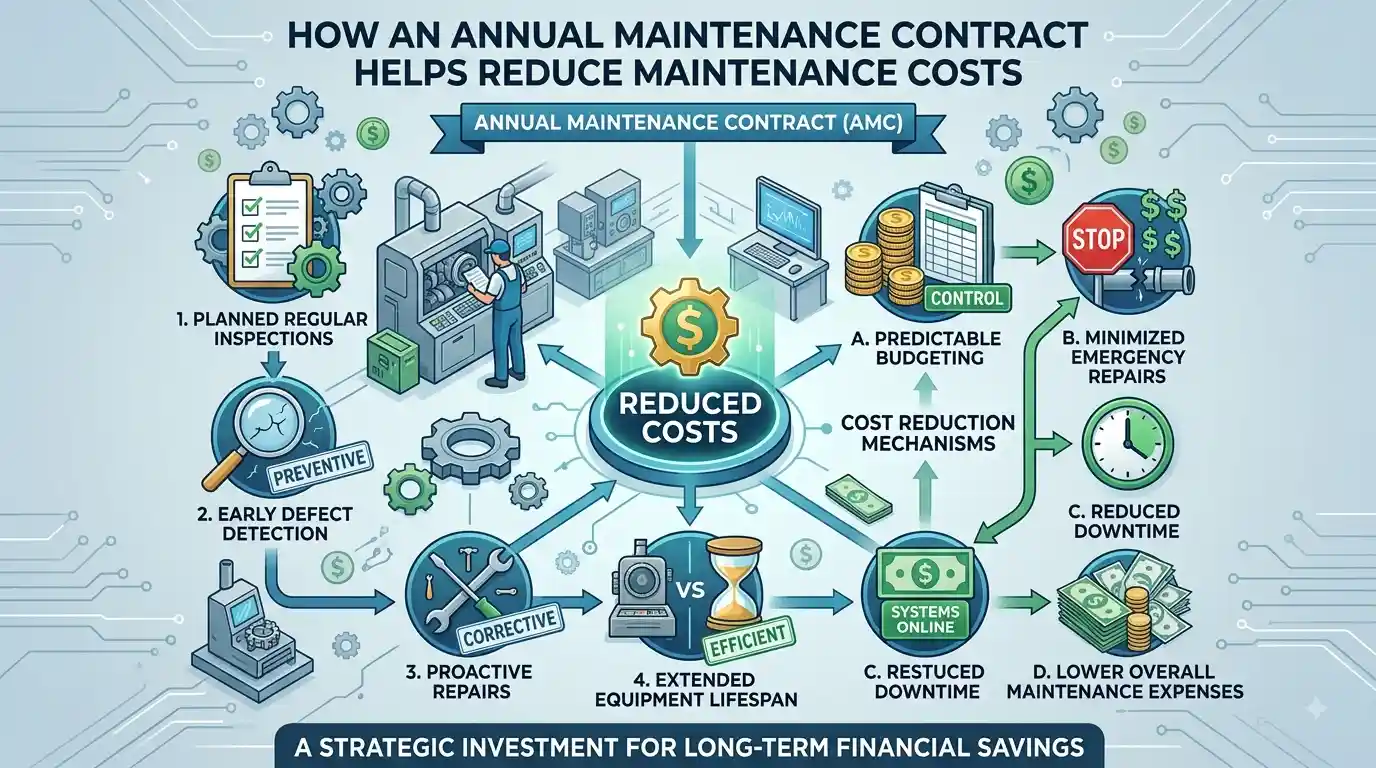
An Annual Maintenance Contract (AMC) provides a structured solution for managing maintenance throughout the year. Through scheduled inspections, preventive servicing, and professional technical support, an AMC can help businesses identify problems before they become expensive repairs.
The goal of an annual maintenance contract is not simply to repair equipment when something goes wrong. It is to create a planned maintenance system that supports reliable performance while helping businesses manage their long-term expenses.
What Is an Annual Maintenance Contract?
An annual maintenance contract is an agreement between a business and a professional maintenance provider for a defined period, generally twelve months.
The contract specifies which equipment, systems, or facilities are covered and what maintenance services the provider will deliver.
Depending on the agreement, an AMC can include routine inspections, preventive servicing, cleaning, testing, troubleshooting, minor repairs, and technical assistance.
Some contracts may also include emergency support or priority service, while spare parts and major repairs may be charged separately.
Businesses should carefully review the service scope to understand what is included in the agreed price.
Why Maintenance Costs Can Increase Without Planning
Unplanned maintenance can become expensive for businesses. When equipment suddenly fails, companies may need urgent technical assistance, replacement parts, or major repairs.
Emergency service may also interrupt normal operations and create additional costs related to downtime.
For example, a malfunctioning cooling system in a commercial property may affect employees and customers. A machinery failure in a production environment can delay operations and affect schedules.
These situations demonstrate why preventive maintenance can be more cost-effective than relying entirely on emergency repairs.
Preventive Maintenance Can Reduce Repair Expenses
One of the main ways an AMC can help control maintenance costs is through preventive servicing.
During scheduled inspections, technicians can identify worn components, unusual performance, leaks, electrical problems, or other early signs of failure.
Addressing these issues at an early stage can sometimes prevent more extensive damage.
A relatively small maintenance issue may become considerably more expensive if it is ignored for months. Regular servicing provides an opportunity to address problems before they reach that stage.
Reduce the Risk of Expensive Breakdowns
Major equipment failures can result in significant repair expenses.
When a critical component fails, the repair may require extensive labor, replacement parts, or specialist technical support.
An annual maintenance contract helps reduce this risk by establishing regular inspections and servicing.
Although preventive maintenance cannot guarantee that equipment will never fail, it can reduce the likelihood of failures caused by neglected maintenance or undetected problems.
Make Maintenance Expenses More Predictable
Unexpected repair bills can make financial planning difficult.
An AMC provides businesses with a predefined maintenance arrangement and agreed pricing for the services included in the contract.
This can make routine maintenance expenses easier to anticipate and include in the annual operating budget.
Businesses can therefore plan their maintenance spending instead of dealing with unpredictable costs every time a problem occurs.
Extend Equipment Lifespan
Equipment replacement can represent a major expense for businesses.
When equipment is poorly maintained, components can deteriorate more quickly and overall performance can decline.
Regular servicing can help protect equipment from excessive wear and identify issues that require attention.
By maintaining equipment properly, businesses may be able to extend its useful operating life and delay unnecessary replacement costs.
Improve Equipment Efficiency
Poorly maintained equipment may consume more resources or operate less efficiently.
For example, blocked filters, dirty components, worn parts, or incorrect settings can affect the performance of certain systems.
During regular maintenance, technicians can inspect and service these components to help equipment operate more effectively.
Improved performance can contribute to better resource management and may reduce unnecessary operating expenses, depending on the equipment involved.
Reduce Business Downtime
Downtime can be one of the most expensive consequences of equipment failure.
When an essential system stops working, employees may be unable to perform their normal duties, production can slow down, and customers may be affected.
An AMC supports preventive maintenance and can provide access to technical assistance when problems occur, depending on the contract.
Reducing the frequency and duration of unexpected maintenance issues can help businesses protect their operational efficiency.
Avoid Repeated Emergency Service Calls
Businesses without a maintenance plan may repeatedly contact service providers whenever equipment develops a problem.
Frequent emergency visits can become expensive over time, especially when the same underlying issue keeps returning.
An annual maintenance contract provides a consistent maintenance schedule. Technicians can monitor equipment condition and identify recurring problems.
This allows businesses to focus on addressing the underlying cause rather than repeatedly dealing with individual symptoms.
Better Maintenance Scheduling
Planned maintenance allows businesses to schedule service activities at convenient times.
Instead of dealing with unexpected failures during peak business hours, routine maintenance can be performed during less disruptive periods when possible.
This can reduce the operational impact of maintenance activities.
Better scheduling can also help maintenance teams work more efficiently because they can prepare the necessary tools, equipment, and parts in advance.
Reduce Administrative Costs
Maintenance management involves more than repair expenses. Businesses may also spend staff time searching for technicians, arranging appointments, following up on repairs, and maintaining service records.
An AMC simplifies some of these administrative tasks by establishing a relationship with one maintenance provider.
The provider handles scheduled maintenance according to the agreement, allowing business staff to spend less time coordinating routine service activities.
Improve Maintenance Record Keeping
Professional maintenance providers may maintain records of service visits and equipment conditions.
These records can show when equipment was inspected, what problems were identified, which components were serviced, and what recommendations were provided.
Over time, this information can help businesses identify recurring maintenance issues.
It can also support better decisions about whether equipment should be repaired, upgraded, or replaced.
Choosing an AMC Based on Value
Businesses should not automatically choose the cheapest annual maintenance contract.
A low-cost agreement may provide limited services or exclude important maintenance activities.
Instead, companies should compare the overall value of each contract.
Important factors include the number of maintenance visits, service coverage, response times, technical expertise, emergency support, exclusions, and additional charges.
A slightly higher contract price may provide better value if it reduces the risk of expensive breakdowns and provides more comprehensive support.
Understand What the AMC Does Not Cover
Understanding exclusions is essential when calculating the potential cost savings of an AMC.
Some contracts may not include major replacement parts, extensive repairs, equipment modifications, or damage caused by misuse.
If these exclusions are not understood, a business may face unexpected charges when a problem occurs.
Before signing the contract, businesses should ask the provider to clearly explain all additional costs.
How Businesses Can Maximize AMC Benefits
Businesses can get more value from an annual maintenance contract by communicating openly with their maintenance provider.
Unusual noises, reduced performance, leaks, overheating, or other warning signs should be reported promptly.
Businesses should also provide technicians with appropriate access to equipment and keep maintenance records organized.
Regularly reviewing the condition of equipment can help identify whether the current maintenance plan still meets business requirements.
Is an Annual Maintenance Contract Cost-Effective?
The cost-effectiveness of an AMC depends on the business’s specific circumstances.
Companies with expensive equipment, large facilities, frequent equipment usage, or high downtime risks may benefit significantly from planned maintenance.
For these businesses, preventing even a few major breakdowns may justify the cost of a maintenance contract.
The best way to evaluate an AMC is to compare its annual cost with the potential expenses associated with emergency repairs, downtime, premature equipment replacement, and administrative maintenance work.
Final Thoughts
An Annual Maintenance Contract can help businesses control maintenance expenses by replacing a reactive approach with planned and preventive servicing.
Regular inspections can identify potential problems early, while scheduled maintenance can support equipment performance and extend asset lifespan. An AMC can also make maintenance expenses more predictable and simplify the management of technical services.
However, businesses should carefully evaluate the contract scope, exclusions, response times, and additional charges before making a decision.
When selected according to the company’s actual requirements, an annual maintenance contract can be a practical investment that helps reduce unnecessary repair costs while supporting reliable and efficient business operations.