

Recovering overdue payments is a common challenge for businesses operating in Dubai. Whether a company is dealing with unpaid invoices, delayed contractual payments, outstanding loans, or customers who have stopped responding, unpaid debts can create serious cash flow problems. A professional Debt collection agency can help businesses manage these situations by communicating with debtors, organizing supporting documents, negotiating payment arrangements, and assisting with appropriate recovery procedures.
For businesses of all sizes, an effective debt recovery strategy can improve financial stability and reduce the time spent chasing overdue accounts. Understanding how a debt collection agency works can help creditors decide when professional assistance is appropriate and what steps they should take before pursuing recovery.
What Is a Debt Collection Agency?
A debt collection agency is a service provider that assists creditors in recovering money owed by individuals or businesses. Depending on its authorization, contractual arrangement, and applicable regulations, an agency may communicate with debtors, issue payment reminders, review account information, negotiate settlements, and help creditors organize their recovery cases.
In Dubai, debt recovery may involve commercial businesses, suppliers, contractors, landlords, service providers, and other creditors. The appropriate recovery approach depends on the nature of the debt, the agreement between the parties, the available evidence, and the debtor’s willingness and ability to pay.
A debt collection agency does not automatically have judicial enforcement powers. Where a debtor refuses to pay and an amicable resolution is unsuccessful, the creditor may need assistance from a qualified lawyer to assess available legal remedies and determine whether court proceedings are appropriate.
Why Do Businesses Need a Debt Collection Agency in Dubai?
Unpaid invoices can affect a company’s ability to pay employees, suppliers, rent, and other operating expenses. When outstanding balances accumulate, businesses may experience financial pressure even when their sales figures appear healthy.

Working with a Debt collection agency can help businesses establish a more organized recovery process. Instead of relying entirely on internal staff, a creditor may receive assistance with debtor communication, payment follow-ups, account documentation, and settlement discussions.
Professional support can be particularly useful when a business has numerous overdue accounts or when debtors repeatedly ignore payment requests. An organized process also helps creditors maintain records of communications and payment commitments.
However, businesses should evaluate the agency’s experience, authorization, fee structure, and proposed methods before appointing it. Recovery efforts should remain professional and comply with applicable UAE laws and regulations.
What Types of Debts Can a Debt Collection Agency Help Recover?
The debts an agency can handle depend on its services, expertise, and authorization. Common examples include the following.
- Unpaid Commercial Invoices
Suppliers and service providers may face overdue invoices after delivering goods or completing agreed work. An agency can help organize invoices, purchase orders, delivery confirmations, and correspondence before contacting the debtor.
- Outstanding Business Loans
Businesses may encounter repayment difficulties when borrowers fail to meet agreed payment schedules. The recovery approach depends on the loan agreement, repayment records, applicable regulations, and any security supporting the debt.
- Contractor and Supplier Payments
Construction companies, subcontractors, distributors, and suppliers may experience delayed payments under commercial contracts. Reviewing contractual terms and supporting evidence can help determine the appropriate recovery strategy.
- Unpaid Service Fees
Consultants, maintenance companies, marketing agencies, and other service providers may need assistance collecting fees for completed work. Evidence of the agreed services and their delivery can be particularly important.
- Other Contractual Debts
Certain rental, commercial, or business-related debts may also be suitable for collection services, subject to the agency’s scope of work and applicable legal requirements.
Not every debt is suitable for the same recovery method. Disputed claims, debts involving complex contractual issues, or cases requiring formal enforcement may need legal assessment.
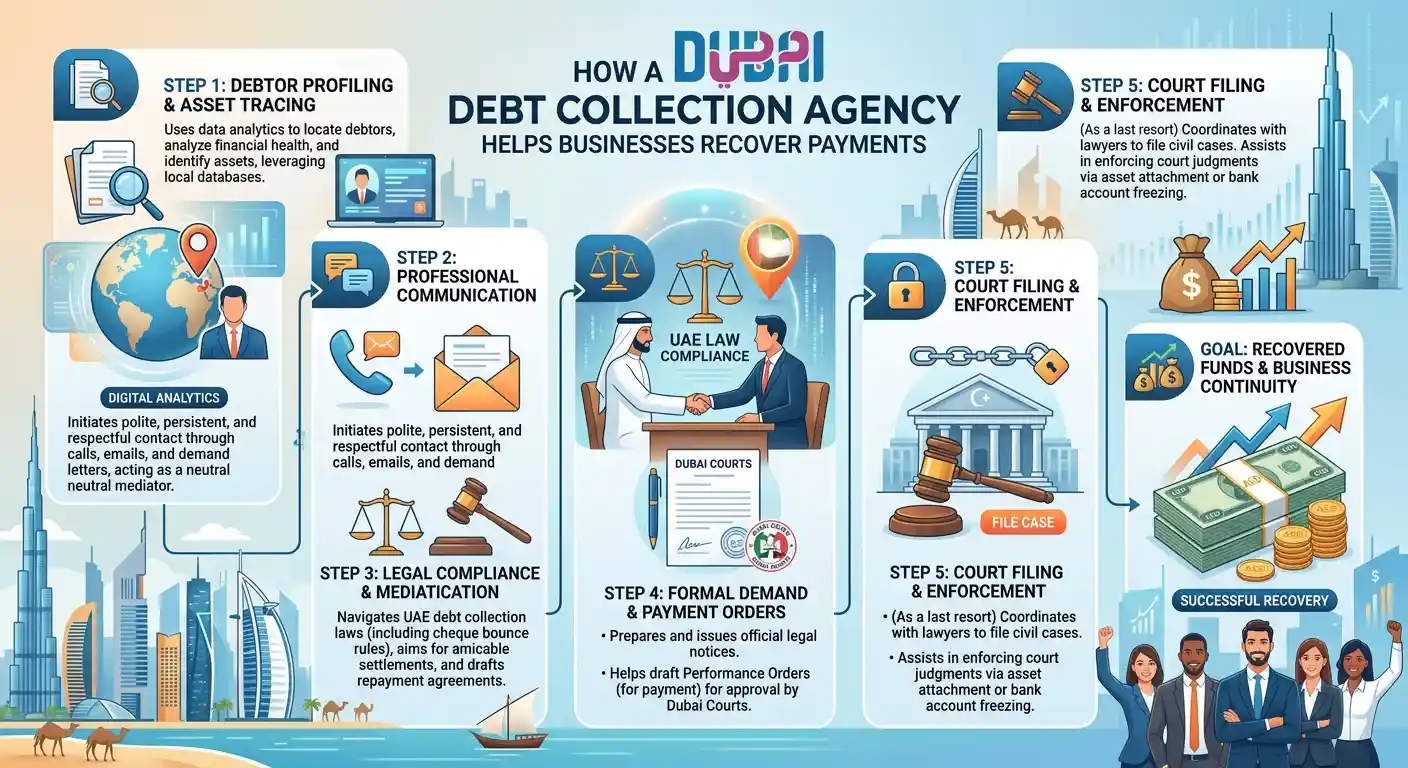
How Does a Debt Collection Agency Recover Outstanding Payments?
A structured recovery process usually begins with reviewing the debt and understanding the circumstances surrounding non-payment.
Step 1: Reviewing the claim
The creditor provides relevant information, including the amount owed, invoice dates, contractual terms, payment history, and previous communications. The agency may review these records to identify missing information and potential disputes.
Step 2: Verifying supporting documents
Documents such as signed agreements, invoices, delivery records, account statements, and written acknowledgments can help establish the basis of the claim. The strength of the evidence may influence the recovery strategy.
Step 3: Contacting the debtor
The agency may contact the debtor through appropriate communication channels, explain the outstanding balance, request payment, and seek clarification if the amount is disputed.
Step 4: Negotiating a payment arrangement
Where appropriate, the agency may discuss a settlement, installment plan, or agreed payment date. Any arrangement should be properly documented, and the creditor should understand its terms before accepting it.
Step 5: Assessing further action
If the debtor does not cooperate, the creditor may consider legal options. A qualified lawyer can assess the claim, limitation periods, jurisdiction, evidence, and procedural requirements before recommending the next step.
The outcome depends on the debtor’s circumstances, the quality of the evidence, and the available legal remedies. No agency can guarantee that every outstanding debt will be recovered.
What Documents Should You Prepare Before Hiring an Agency?
Preparing complete documentation can make it easier to assess a claim and begin recovery efforts. Although the precise requirements vary, creditors should consider gathering:
- Signed contracts, purchase orders, or service agreements.
- Unpaid invoices and account statements.
- Delivery notes or evidence that the agreed services were provided.
- Payment records showing amounts already received.
- Emails, letters, and messages concerning the debt.
- Written acknowledgments of the outstanding balance.
- Any repayment plans or settlement agreements.
- Accurate debtor identification and business contact information.
Creditors should provide information honestly and disclose any genuine dispute, partial payment, credit note, or previous settlement discussion. Incomplete or inaccurate records can complicate recovery and weaken a claim if legal proceedings become necessary.
How Much Does a Debt Collection Agency Charge?
The cost of hiring a Debt collection agency varies according to the service provider, debt amount, complexity of the case, and agreed fee arrangement. Some providers may charge a percentage of the amount recovered, while others may require fixed fees, initial charges, or a combination of payment structures.
Before signing an agreement, ask for a written explanation of all charges. Clarify whether fees apply to partial recoveries, negotiated settlements, legal referrals, or cases where collection is unsuccessful.
Businesses should also establish who is responsible for legal fees, court charges, translation expenses, and other disbursements if the matter proceeds beyond amicable collection. These expenses may be separate from the agency’s own charges.
Comparing providers based solely on the lowest fee may be misleading. Consider the provider’s experience, transparency, professional standards, and ability to explain realistic recovery options.
What Should You Look for When Choosing a Debt Collection Agency in Dubai?
Selecting an appropriate provider is important because the recovery process can affect business relationships, financial records, and legal interests.
First, verify the provider’s legal status, authorization, and permitted scope of services. Ask about its experience with similar debts, including commercial invoices, contractual claims, or overdue business accounts.
Second, request a clear service agreement explaining the agency’s responsibilities, fees, reporting procedures, and conditions for ending the engagement. You should understand how frequently updates will be provided and how settlement offers will be presented for approval.
Third, ask how the provider handles confidential financial and personal information. Debt recovery can involve commercially sensitive records, so information should be handled appropriately and shared only where legally permitted.
Finally, confirm whether the provider can coordinate with qualified legal professionals when negotiations fail. A practical recovery plan should distinguish between voluntary collection efforts and formal legal action.
Is It Better to Hire an Agency or a Debt Recovery Lawyer?
The choice depends on the circumstances of the debt. An agency may be suitable when the creditor wants assistance with payment reminders, debtor communication, account follow-ups, and settlement negotiations.
A lawyer may be more appropriate when the debtor disputes liability, the contract requires detailed legal interpretation, urgent protective action may be necessary, or formal proceedings are being considered.
In some cases, both services may be useful at different stages. An agency can support initial recovery efforts, while a lawyer evaluates the legal merits and advises on litigation or enforcement where available.
Businesses should not assume that hiring an agency automatically starts legal proceedings or stops a limitation period from expiring. If a claim is old, disputed, or financially significant, obtain legal advice promptly to understand the relevant deadlines and options.
Conclusion
A professional Debt collection agency can help Dubai businesses manage overdue accounts, communicate with debtors, organize supporting documents, and explore negotiated payment solutions. Choosing a suitable provider requires careful consideration of its authorization, experience, fee structure, confidentiality practices, and approach to unresolved claims.
Businesses can improve their recovery efforts by maintaining accurate financial records, documenting payment agreements, and addressing overdue invoices promptly. When negotiations fail or a debt involves substantial legal issues, consulting a qualified lawyer can help determine the appropriate next steps.
The most effective debt recovery strategy is one that combines organized documentation, professional communication, realistic expectations, and compliance with applicable UAE laws. By taking these measures, businesses can pursue outstanding payments more systematically while protecting their commercial interests and long-term financial stability.