
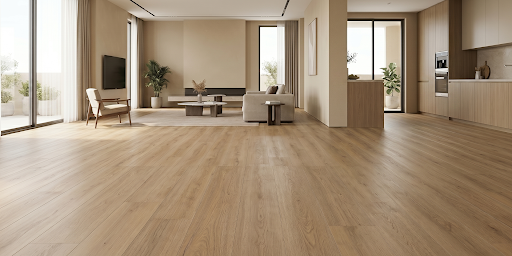

Both products sit under the same broad family, both are waterproof, and in a showroom they can look almost identical. That is exactly why the SPC vs vinyl flooring decision confuses so many buyers. The real difference is in the core beneath the decor layer, and that single structural detail changes how the floor behaves in heat, how it feels underfoot, and how much preparation your subfloor needs. This guide sets out where each one genuinely wins, with product guidance from Floorna. SPC uses a rigid core made from limestone powder blended with polymer, which produces a dense, dimensionally stable board. Flexible vinyl uses a softer PVC core with no mineral filler, so the plank bends in the hand. Everything else, including the printed decor and the clear wear layer on top, works the same way in both. The What Is SPC Flooring guide covers the layer structure if you want the technical detail, and the Pros & Cons of Vinyl overview does the same for flexible formats. Rigid cores expand and contract far less through air conditioning cycles and direct sunlight. In rooms with large glazed spans, this is decisive. Flexible boards are more likely to show movement at the seams over time in those conditions. Flexible vinyl is the warmer and quieter option. It has more give underfoot and absorbs footfall noise naturally, which some households prefer in bedrooms and upper floors. A rigid board feels firmer and more solid, closer to timber than to a cushioned surface. Rigid planks bridge minor unevenness in a screed reasonably well. Flexible and glue down formats conform to whatever sits beneath them, so every ridge and hollow eventually shows through. That difference often decides the preparation budget. Both are waterproof, so the choice comes down to point loads and appliances. A rigid core handles heavy units and dropped items better, which usually makes it the safer specification here. Traffic is light and comfort matters more than impact resistance. This is where flexible vinyl earns its place, and where the price difference is easiest to justify. High traffic, shoes, furniture movement and strong daylight all point toward a rigid board. The Bergo Rigid LVT collection covers the formats most suited to these spaces. Flexible vinyl generally costs less per square metre, but the saving can disappear once subfloor levelling is priced in, because it demands a flatter base. Rigid boards cost more upfront and usually install faster on a click system. Compare the full installed figure rather than the headline rate, since the preparation line is where quotations diverge most. Start with the room, not the product. If it faces strong sun, carries heavy furniture or sees daily foot traffic in shoes, choose rigid. If it is a quiet, shaded space where softness and budget matter more, flexible vinyl is a perfectly sound decision. Reading the detailed spc vs vinyl flooring comparison alongside samples seen in your own lighting will settle most remaining doubts. There is no universal winner in SPC vs vinyl flooring, only a better fit for a specific room. Rigid cores suit heat, traffic and heavy loads. Flexible boards suit comfort, acoustics and tighter budgets in calmer spaces. Assess each room on those terms, price the preparation honestly, and the team can help you specify the right board for each area of the homeWhat Actually Separates SPC vs Vinyl Flooring?
Where Each One Wins?
1. The SPC vs Vinyl Flooring Verdict on Stability
2. Comfort and Acoustics
3. Subfloor Tolerance
SPC vs Vinyl Flooring by Room
1. Kitchens, Bathrooms and Utility Areas
2. Bedrooms and Quiet Spaces
3. Hallways and Open Living Areas
What About Cost and Installation?
How Should You Decide?
Conclusion

Related Reading: Which Shop Sells Curtains in Dubai?
Related Reading: Dog Boarding vs In-Home Pet Sitting in Dubai: Which Is Safer for Holidays?